某公司研发星球维护系统,请使用饿汉式单例模式的实现思想,设计编写地球类。
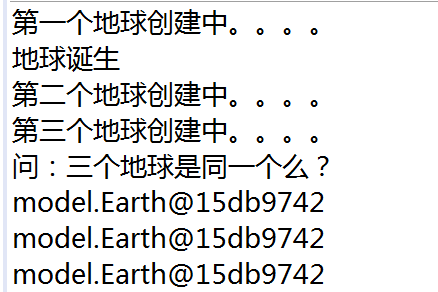
程序运行参考效果图如下:
1
2
3
4
5
6
7
8
9
10
11
12
13
14
15
16
17
| package me.feihong.single;
public class Earth {
private Earth(){
}
private static Earth earth=new Earth();
public static Earth getEarth(){
return earth;
}
}
|
1
2
3
4
5
6
7
8
9
10
11
12
13
14
15
16
17
18
19
20
21
22
23
24
| package me.feihong.test;
import me.feihong.single.Earth;
public class test {
public static void main(String[] args) {
System.out.println("第一个地球创建中。。。。");
Earth one=Earth.getEarth();
System.out.println("第二个地球创建中。。。。");
Earth two=Earth.getEarth();
System.out.println("第三个地球创建中。。。。");
Earth three=Earth.getEarth();
System.out.println("问:三个地球是同一个么?");
System.out.println(one.getEarth());
System.out.println(two.getEarth());
System.out.println(three.getEarth());
}
}
|
输出结果:
1
2
3
4
5
6
7
| 第一个地球创建中。。。。
第二个地球创建中。。。。
第三个地球创建中。。。。
问:三个地球是同一个么?
me.feihong.single.Earth@15db9742
me.feihong.single.Earth@15db9742
me.feihong.single.Earth@15db9742
|
请使用懒汉式单例模式的实现思想,设计编写皇帝类。
程序运行参考效果图如下:

任务
实现步骤:
1、定义私有构造方法
2、定义私有静态类对象
3、定义公有静态方法返回类内的私有静态对象,结合判断实现对象实例化
4、编写测试类,结合注释完成测试单例的皇帝类信息,程序效果参考运行效果图(具体对象引用信息不限)
1
2
3
4
5
6
7
8
9
10
11
12
13
14
15
16
17
18
19
20
| package me.feihong.king;
public class Emperor {
private Emperor() {
}
private static Emperor instance=null;
public static Emperor getInstance() {
if(instance==null)
instance=new Emperor();
return instance;
}
}
|
1
2
3
4
5
6
7
8
9
10
11
12
13
14
15
16
17
18
19
20
21
22
23
| package me.feihong.king;
public class EmperorTest {
public static void main(String[] args) {
System.out.println("创建1号皇帝对象");
Emperor one=Emperor.getInstance();
System.out.println("创建2号皇帝对象");
Emperor two=Emperor.getInstance();
System.out.println("创建3号皇帝对象");
Emperor three=Emperor.getInstance();
System.out.println("三个皇帝对象依次是:");
System.out.println(one);
System.out.println(two);
System.out.println(three);
}
}
|